Explain the Different Types of Access Control Lists Acls
Extended ACLs are more complex to configure and require more CPU time than the standard ACLs but they. Extended access control lists are generally implemented close to the source.

Extended Access Control Lists Acls Access Control List Acls Access Control
Filesystem ACLs filter access to files andor directories.

. Filesystem ACLs tell operating systems which users can access the system and what privileges the users are allowed. The wildcard mask is an inverted mask where the matching IP address or range is based on 0 bits. Extended Access-list These are the ACL which uses both source and destination IP address.
Extended access control lists or extended ACLs on the. A security identifier SID an access mask a flag for operations that can be performed on the object and another set of flags to determine inherited permissions of the. These ACLs permit or.
Dynamic ACL This is a more secure ACL that utilizes authentication extended ACLs and Telnet. Standard access lists with standard access lists you can filter only on the source IP address of a packet. These types are standard-numbered standard-named standard-numbered with the sequence editing feature standard-named with the sequence editing feature extended-numbered extended-named extended-numbered with the sequence editing feature and extended-named with the sequence editing feature.
There are eight types of ACLs. Part 2 Numbered ACL Syntax. It permits users to access a network only after undergoing an authentication process.
Extended access lists allow you to evaluate the source and destination IP addresses the type of Layer 3 protocol source and destination port and other parameters. The following example describes the way in which standard access lists can be used. We can view the current ACL using the getfacl command.
These two types are the most widely used ACLs and the ones I will focus on in this and future articles but there are some advanced ACLs as well. There are two types of ACLs. Reflexive ACL This is a reactive ACL that filters incoming and outgoing traffic thats dependent on upper-layer session information.
What Are The Types of ACLs. Lets say that server S1 holds some important documents that need to be available only to the companys management. In this case the input should give one path name per line.
Access control entries either permit or deny trafficthat matches the rule. Part 5 Named ACL Configuration Demonstration. For example on how ACLs are used consider the following network topology.
Hostnameconfig access-list nonIP ethertype deny 1256 hostnameconfig access-list nonIP ethertype permit any hostnameconfig access-group nonIP in interface inside hostnameconfig access-group nonIP in interface outside. This type allows you to only evaluate packet source IP addresses. The additional bits are set to 1 as no match required.
Access control lists tell a computer system or network how much access to give to a user. It also updates and deletes ACL entries for each file and directory that was specified by pathIf path was not specified then file and directory names are read from standard input stdin. When it comes down to the Standard Access Lists it is only possible to source the IP.
These types of access list are not as powerful as extended access lists but they are less processor intensive for the router. The wildcard 0000 is used to match a single IP address. Standard ACLs are not as powerful as extended access lists but they are less CPU intensive for the device.
These ACLs permit or deny the entire protocol suite. They let us tack on access for other users or groups. Networking ACLs filter access to the network.
An access control list ACL contains rules that grant or deny access to certain digital environments. There are two main different types of Access-list namely. This type of situation is what Linux Access Control Lists ACLs were intended to resolve.
Extended ACLs can be configured using access list names instead of access list numbers. Part 1 What are Access Lists. Setfacl sets replaces modifies or removes the access control list ACL to regular files and directories.
Access Control Lists ACLs are used by firewalls ACL. On Cisco routers there are two main types. We could configure an access list on R1 to enable access to S1 only to users from the management network.
A standard ACL list is generally implemented close to the destination that it is trying to protect. There are two types of ACLs as far as we know and they are Standard Access Lists and Extended Access Lists. When it comes to the various operating systems ie Windows Linux Mac OS X the entries in the ACLs are named access control entry or ACE and are configured via four pieces of information.
1 Standard Access Lists. There are two types of access lists. Part 6 IPv6 ACLs Syntax and Demonstration.
Part 3 Numbered ACL Configuration Demonstration. There are several types of access control lists and most are defined for a distinct purpose or protocol. Explain what an ACL is and what typical contents are.
Part 7 Applying ACLs to Interfaces. Cisco access control lists ACL filter based on the IP address range configured from a wildcard mask. Extended Access-list These are the ACL that uses source IP Destination IP source port and Destination port.
Standard Access-list These are the Access-list that are made using the source IP address only. Part 8 Where should you apply ACLs closer to source or destination. For those of you who are familiar with access control lists youre probably aware that there are many different types of access control lists.
A name and a number are used to identify access lists. The standard ACL aims to protect a network using only the source address. It is the most basic type and can be used for simple.
When you apply an ACL to a feature that determines whether trafficis allowed through the ASA or is dropped such as global and interface access rules permit and deny mean what they say. Part 4 Named ACL Syntax. Let us explains what these are about.
We have access control lists for IP version 4 for IP version 6 for IPX for DECnet for AppleTalk and the list goes on and on and on. ACLs allow us to apply a more specific set of permissions to a file or directory without necessarily changing the base ownership and permissions. There are four types of ACLs that play different roles in a network including Standard Reflexive Extended and Dynamic.
Standard Access-list These are the Access-list which are made using the source IP address only. What are the different types of ACLs. They are not as powerful as extended ACLs but use less computing power.
An ACL can control rights and privileges to anything from.

Types Of Access Control Lists Explained
Types Of Access Control Lists Explained
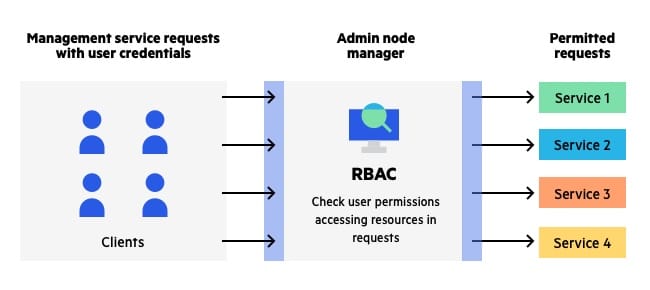
What Is Access Control List Acl Types Linux Vs Windows Imperva
Comments
Post a Comment